Showing posts with label translational research. Show all posts

Tuesday, May 18, 2010

Unsexy Science?

Newsweek's cover story is "Desperately Seeking Cures: How the road from promising scientific breakthrough to real-world remedy has become all but a dead end." In it, Sharon Begley tries to break down the reasons we're all not living to 150 yet. Her main argument is that finding cures for disease is "unsexy." Unfortunately for an article about science, the article is thick on anecdotes but thin on statistics, and deteriorates into yet another Begley diatribe about how basic research fails to fill the public good.

First off, I take issue with the notion that curing disease is the only goal of the NIH or of academic science. Science actually shows that ~2/3 of human disease is self-inflicted, as the WHO points out: "Seven leading risk factors... account for almost 60% of all ill health in the Region." The NIH, correctly, takes a broad view of applied science: "NIH’s mission is to seek fundamental knowledge... to enhance health, lengthen life, and reduce the burdens of illness and disability." If you ask me, weapons and global warming are greater health threats than diseases caused by overeating.

While Begley claims disease is "unsexy," the reality is that the NIH pours money into medical school research campuses and every scientist has wet dreams about curing cancer. In fact, the last guy to run the NIH (Elias Zerhouni) was an MD who focused almost solely on translational stuff. Begley's argument boils down to a "lack of cures," but that's a loaded metric. As I've pointed out here before, testing a single cure can cost the same as 1,000 research labs per year. The $50b NIH budget just couldn't accomodate that, although we could fund it if we cut back our military. You want better cures? Pay scientists what they deserve.

From the article, it's clear that Begley (who holds only a B.A. and has never done research) thinks science is simple: find a drug, cure a disease. So she can't understand what's holding up the works. But what we've learned over time is that conventional small molecule therapeutics may not work for chronic disease. On the other hand, stem cell technologies and genomics are showing a lot of promise for curing disease. The system is by no means perfect, but I think in 50 years we will look back and realize that it was working, at least as much as we let it work.

Monday, February 1, 2010

I was blind but now I see

It's easy to get caught up in the political tailwinds, but the truth is that politics rarely makes progress. Science, however, is constantly surprising me with its ability to power science fiction into science fact.

Take gene therapy. Fifteen years ago, the field seemed dead (some of its early adopters actually died, which did not help matters). Today? It's the future of medicine. Gene therapists have literally given sight to the blind, cured bubble boys (left), and most recently reversed beta thalassemia - and sickle cell anemia is not far behind.

The secret? Two words, my friend: Evo and Lution. Gene therapy works because the body selects for successful cells. The healthy cells - the ones with the good copy of the gene - outcompete the shitty ones mother nature dealt you. And your body is so highly optimized, even a small population of good cells is enough to keep the bad apples at bay.

So what's next for gene therapy? Well I'll put it to you this way: of the ~4,000 human diseases, only a few are currently treatable. As genomic data explodes, so will our understanding of the genetic basis of these diseases - and so will the cures. So in our lifetimes we can expect to see cures for Fanconi's anemia, Huntington's disease, polycystic kidney disease, and stubborn old cystic fibrosis, just to name a few. That is what scientists are bringing to society - but what is society bringing back? Only 39% of Americans believe in evolution. I wonder sometimes who we are busy saving.

Tuesday, December 1, 2009

Why Boston

Excerpt from the ridiculously long NIH postdoc fellowship application I'm writing (this is a case where government has definitely gotten too large):
The _________ lab is the perfect environment for me, for several reasons. Translating basic research knowledge into societal well-being and progress is important to me. Having gained much already from the ivory tower, I now seek a lab that will expose me to medical doctors and clinical environments and human patients. I am very interested in stem cells and regenerative medicine, and the _________ lab is leading the fore in this field and part of the __________ Stem Cell Institute, the top regenerative medicine body in the field. I am interested in kidney tissue biology as it relates to several fields – polycystic kidney disease, epithelial-mesenchymal transitions, aging, differentiation, etc. – and the ________ Unit at ______________ has a tremendously high concentration of high-caliber nephrology researchers. The surrounding city of Boston will be a completely new academic network to connect to and learn from, and features powerful potential collaborators within a few blocks of our lab. These reasons convinced me to pull up stakes from my very comfortable and congenial surroundings in Berkeley and move to what I see as the most exciting place to be in research today.
I know, I know. Can't end a phrase with a preposition. I know.

Tuesday, August 11, 2009

A shortcut to curing human disease

Last time we discussed the crazy high costs of sponsoring clinical trials. What you may not realize, however, is that there's a shortcut to making medical advances - the medical "innovation".

"Medical innovations" is what surgeons call trying out new techniques on patients. It's important to keep in mind here the difference between medicine and research. As a recent 
Science article explains:
... What are the hallmarks of an innovative stem cell–based medical intervention? To answer this question, we have to clarify the central difference between research, as carried out in a clinical trial process, and medical innovation. As explained in the seminal U.S. research ethics document, the Belmont Report, research aims at scientifically generalizable results (not patient care), whereas the goal of medical innovation is the benefit of the individual patient. Because of these disparate aims, the regulatory requirements for clinical research do not serve as a proper surrogate for the ethical standards appropriate for attempts at medically innovative therapies. In short, the ethics of medical innovation is the ethics of patient care, not research.
There is potential here for a cheapie shortcut towards curing human disease. Basic research funding is cheap and gives us detailed, scientific information. Medical innovations are cheap and let us test potential cures. If we can establish lines of communication between the two (plus reasonable ethical guidelines for their application), perhaps we can circumvent the need for prohibitively expensive clinical trials - and discover some new cures in the process.

Wednesday, August 5, 2009

Why isn't my disease cured yet?
And then there's the cost.

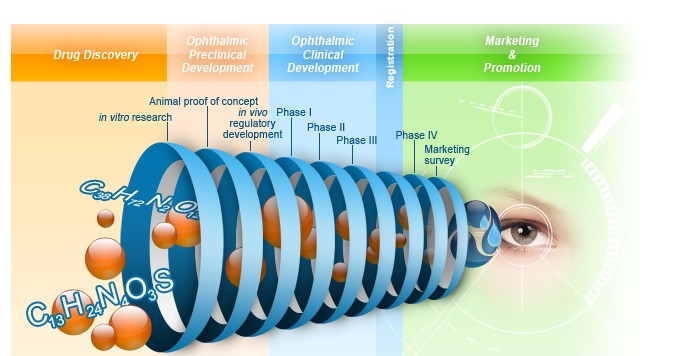
the long therapy "pipeline" starts with broad basic research

I want to get back to this question of curing diseases. In a way, Palin/Chavez/Begley are right: the academic community (like most sectors of our society) could do more relevant work. It's not that fruit flies and worms are useless - after all, breakthroughs like RNA interference, which cures cancer in animal models, emerged from such model systems. But research without grounding can turn into an intellectual "random walk," mental masturbation that rewards scientists for playing it safe. For biology to be relevant, we must avoid such distractions and focus on the big questions, using systems great and small.

Curing disease is a noble goal, but the fiscal and legal barriers are formidable. People are not lab rats, and thus experimental medicine requires an M.D. and carries serious legal/professional/ethical considerations. Remember Jesse Gelsinger's death, and the lawsuit that followed? That killed the field of gene therapy. And then there's the cost. Funding a biotech through a clinical trial costs ~500 million dollars - enough money to fund 1,000 academic research labs. (The FDA requires the doctors to take extremely detailed notes on each patient's progress, which takes up hundreds of billing-hours.) Most of these trials fail, and even successful drugs are often recalled when side effects are identified.

As a country, we are smart enough and rich enough to overcome these barriers if we want to. Health-related research funding is less than 5% of what we spend on the military, so each F-22 we cut is another clinical trial we can sponsor. But those trials shouldn't come at the cost of basic research that helps us understand how biology works. The problem is not the 1% of people doing basic research - it's the 99% of people that just don't care. As science journalist Henry Fountain recently put it, Our mass culture is just not that interested in hearing about it. But if we want better therapies, we need to encourage biologists to make those big discoveries, chase those big unknowns.

UPDATE 8/6: Jim Watson just weighed in on this issue from the perspective of the war on cancer. For once, he doesn't sound crazy.

Next: Cutting the cost of new cures.

Thursday, July 23, 2009

Is cancer incurable?


All of the livers above are from the same strain of mouse, which develops liver cancer. The livers on the right are from mice injected with virus that expresses a special microRNA that is usually lost in liver cancers. The livers on the left are from mice that were injected with a control virus. The animals were injected with the virus at the time when their livers had already developed small tumors, and then sacrificed for autopsy 8 weeks later. The same issue of Cell features another article about a microRNA that prevents breast cancer metastasis.

Despite their power, microRNAs are pretty new, and were discovered only through basic research:

The first microRNA was discovered in 1993, in worms. It took seven years for the second one to be found, also in worms, but then the floodgates burst.