Showing posts with label cancer. Show all posts

Monday, November 16, 2009

Revenge is sweet

About 6 months ago, I commented on a medical blog that possibly - just possibly - we were overtreating for breast cancer. After all, it was possible that some tumors came and went without us even knowing about it. I suggested that we needed some negative controls for breast cancer, and that it wasn't a bad idea to let some patients opt out of masectomies and see what happens.

I was laughed off the blog. My scientific credentials and ethical values were challenged. The comments were very reactionary, not very scientific.

Six months later, and my how things have changed. The phenomenon I predicted was borne out in major studies. I heard doctors talking about it on NPR. Now, in recognition of these new findings, it looks like the recommended age for mammography may soon change from 40 to 50.

A lot of bloggers call themselves "skeptics" because they dare to mock other peoples' beliefs. But that's not what science is about. Science is about creativity and challenge, not biology-textbook dogma. It's about thinking outside of the box. From that perspective, I daresay some of these science bloggers could learn a thing or two from the people they are mocking.

Wednesday, August 5, 2009

Why isn't my disease cured yet?
And then there's the cost.

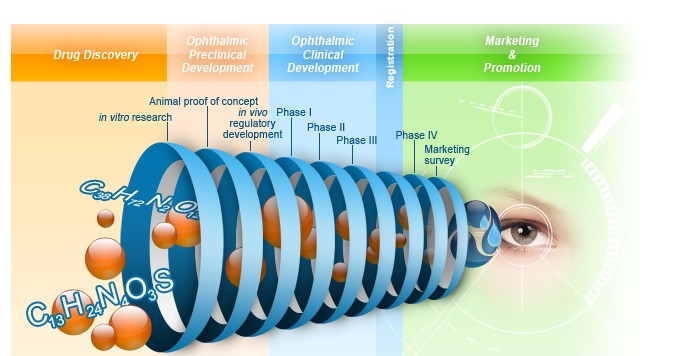
the long therapy "pipeline" starts with broad basic research

I want to get back to this question of curing diseases. In a way, Palin/Chavez/Begley are right: the academic community (like most sectors of our society) could do more relevant work. It's not that fruit flies and worms are useless - after all, breakthroughs like RNA interference, which cures cancer in animal models, emerged from such model systems. But research without grounding can turn into an intellectual "random walk," mental masturbation that rewards scientists for playing it safe. For biology to be relevant, we must avoid such distractions and focus on the big questions, using systems great and small.

Curing disease is a noble goal, but the fiscal and legal barriers are formidable. People are not lab rats, and thus experimental medicine requires an M.D. and carries serious legal/professional/ethical considerations. Remember Jesse Gelsinger's death, and the lawsuit that followed? That killed the field of gene therapy. And then there's the cost. Funding a biotech through a clinical trial costs ~500 million dollars - enough money to fund 1,000 academic research labs. (The FDA requires the doctors to take extremely detailed notes on each patient's progress, which takes up hundreds of billing-hours.) Most of these trials fail, and even successful drugs are often recalled when side effects are identified.

As a country, we are smart enough and rich enough to overcome these barriers if we want to. Health-related research funding is less than 5% of what we spend on the military, so each F-22 we cut is another clinical trial we can sponsor. But those trials shouldn't come at the cost of basic research that helps us understand how biology works. The problem is not the 1% of people doing basic research - it's the 99% of people that just don't care. As science journalist Henry Fountain recently put it, Our mass culture is just not that interested in hearing about it. But if we want better therapies, we need to encourage biologists to make those big discoveries, chase those big unknowns.

UPDATE 8/6: Jim Watson just weighed in on this issue from the perspective of the war on cancer. For once, he doesn't sound crazy.

Next: Cutting the cost of new cures.

Thursday, July 23, 2009

Is cancer incurable?


All of the livers above are from the same strain of mouse, which develops liver cancer. The livers on the right are from mice injected with virus that expresses a special microRNA that is usually lost in liver cancers. The livers on the left are from mice that were injected with a control virus. The animals were injected with the virus at the time when their livers had already developed small tumors, and then sacrificed for autopsy 8 weeks later. The same issue of Cell features another article about a microRNA that prevents breast cancer metastasis.

Despite their power, microRNAs are pretty new, and were discovered only through basic research:

The first microRNA was discovered in 1993, in worms. It took seven years for the second one to be found, also in worms, but then the floodgates burst.

Wednesday, July 15, 2009

Why isn't my disease cured yet? The problem.

Sharon Begley - Newsweek's science editor - recently wrote an op-ed which blames academic science for "slowing" the search for cures. This comes on the heels of her cover story last year which says we've lost the war on cancer by funding a bunch of ivory-tower academics who "never met a signaling pathway they didn't like."

Begley's not alone. Last year, Sarah Palin made headlines by complaining about a grant for biological research on fruit flies. (Some folks later pointed out that fruit flies had actually taught us a lot about birth defects, one of Palin's champion causes.) On the opposite side of the political spectrum, left-wing strongman Hugo Chavez of Venezuela recently blasted academic scientists for working on 'obscure projects' and told them to start doing something useful with their lives.

When Palin and Chavez (and Begley) say the same thing, it's time to start listening. Is there something to all this? Is academic research too ivory tower? Is that why there are so many diseases that are not being cured - because we are too busy curing diseases in worms? I'll post my thoughts on this important question in follow-up posts. What do you think?

Saturday, May 2, 2009

"I decided not to finish my thesis"

שוב יום אחד לפני מיתתך
"Repent one day before you die." --Avot 2:13

In a recent comic strip, scientist-cum-cartoonist Jorge Cham explains in naked pink why the war on cancer won't be won anytime soon. Along the way, he wrestles with the insignificance of both art and science in the face of life-threatening disease. In the final panels of this poignant piece, he describes being approached at a booksigning by a chemo patient:


What if you were diagnosed with cancer? If you only had six months to live? How would you change your life?

And why aren't you doing that right now?

--

Wednesday, March 18, 2009

Back-of-the-envelope ~
Can coffee give me cancer?

The jury is still out on whether caffeine is bad for your health. However, caffeine has been proven to block the body's DNA damage repair pathway, which protects us from mutations. This means that a high enough dose of caffeine should theoretically be carcinogenic - a fact that cost/benefit analyses of caffeine such as this article frequently fail to mention. So is the amount of caffeine in a cup of coffee enough to block DNA repair? Let's crunch the numbers in our very first back-of-the-envelope calculation:

~1~ The molecular weight of caffeine is 194, or ~200. So a 1 M concentration of caffeine is ~200 g/L.

~2~ Caffeine starts inhibiting DNA repair in cells at ~1 mM concentration in the surrounding fluid (blood, in our case). 1 mM = 1 M/1000 = 200 g/L/1000 = 200 mg/L.

~3~ The average cup of coffee contains 100 mg caffeine. Upon ingestion, this is diluted into your ~5 L of blood. Assuming 100% retention of the compound, caffeine's final concentration in your bloodstream is 100 mg/5 L = 20 mg/L. This is about ten times less than the active concentration of caffeine calculated in step 2.

So according to this back-of-the-envelope calculation, a single cup of coffee is unlikely to generate bloodstream caffeine concentrations that would inhibit DNA repair. Ten cups of coffee, however, might certainly be dangerous, and some energy drinks contain nearly this much. In addition, it is possible that daily consumption of caffeine has a cumulative effect.

Note: I am not a medical doctor, and this is not meant to be medical advice.