Showing posts with label drugs. Show all posts

Tuesday, May 18, 2010

Unsexy Science?

Newsweek's cover story is "Desperately Seeking Cures: How the road from promising scientific breakthrough to real-world remedy has become all but a dead end." In it, Sharon Begley tries to break down the reasons we're all not living to 150 yet. Her main argument is that finding cures for disease is "unsexy." Unfortunately for an article about science, the article is thick on anecdotes but thin on statistics, and deteriorates into yet another Begley diatribe about how basic research fails to fill the public good.

First off, I take issue with the notion that curing disease is the only goal of the NIH or of academic science. Science actually shows that ~2/3 of human disease is self-inflicted, as the WHO points out: "Seven leading risk factors... account for almost 60% of all ill health in the Region." The NIH, correctly, takes a broad view of applied science: "NIH’s mission is to seek fundamental knowledge... to enhance health, lengthen life, and reduce the burdens of illness and disability." If you ask me, weapons and global warming are greater health threats than diseases caused by overeating.

While Begley claims disease is "unsexy," the reality is that the NIH pours money into medical school research campuses and every scientist has wet dreams about curing cancer. In fact, the last guy to run the NIH (Elias Zerhouni) was an MD who focused almost solely on translational stuff. Begley's argument boils down to a "lack of cures," but that's a loaded metric. As I've pointed out here before, testing a single cure can cost the same as 1,000 research labs per year. The $50b NIH budget just couldn't accomodate that, although we could fund it if we cut back our military. You want better cures? Pay scientists what they deserve.

From the article, it's clear that Begley (who holds only a B.A. and has never done research) thinks science is simple: find a drug, cure a disease. So she can't understand what's holding up the works. But what we've learned over time is that conventional small molecule therapeutics may not work for chronic disease. On the other hand, stem cell technologies and genomics are showing a lot of promise for curing disease. The system is by no means perfect, but I think in 50 years we will look back and realize that it was working, at least as much as we let it work.

Sunday, August 9, 2009

Health Care or Don't Care?

A friend of mine at lab - socially liberal, fiscally conservative - has been trying to decide his views on the public health care option. He wrote this and forwarded it to all his friends. -SS

This is the link to an extremely interesting, and disturbing interview by Bill Moyers of Wendell Potter, a former CEO of Cigna, one of the largest insurance companies in the country. I highly recommend watching it to become much more informed about the issue, whether you are a democrat or republican.

http://www.pbs.org/moyers/journal/07312009/watch.html

(SS: here's a snippet...)


I personally was a bit on the fence for the public option. For those of you who don't know me, I am socially liberal, but fiscally conservative. Government waste and bureaucracy are huge problems in our country, and we can't just create programs simply because they would be nice to have. On the other hand, health insurance companies have an insane amount of bureaucracy, and the system they have is designed to make people give up and just accept whatever they are told.

This interview is not some rhetoric from a democrat or republican congressman spewing party dogma. This is a former chief executive from the insurance industry, who knows the ins and outs of the business. It is very informative. If you don't have the time to watch the 30 minute interview, let me highlight a few points.

1. The insurance companies are terrified of a public option above all other things. It will remove their oligopoly.

2. The insurance companies are proposing to eliminate pre-existing conditions denials of coverage because they don't like them. They are the ones who created the pre-existing condition denials. No one is forcing them to do that. Why haven't they eliminated them before? According to Wendell Potter, they won't. Once the reform talk is over, they'll continue their current practice.

3. The companies want status quo. They are making lots of money currently and will do whatever it take to kill any legislation.

4. He outlines the methods in which the companies eliminate insurance for those that they aren't making a profit off of.

5. In the 1980's, 95% of premiums went to pay for care. Now that % is down in the eighty percentiles. The rest is either insurance bureaucracy or profit.

6. Wall Street gives insurance companies better rankings the less they spend on their members.

7. One of the media statements the insurance lobby has put forth is that "you don't want a government bureaucrat coming between you and your doctor." Well, right now you have a Wall Street bureaucrat doing just that.

8. The insurance companies want everyone to have insurance. Not out of the goodness of their hearts, but because it means more premiums for them.

There are many other points that come across. If you can spare the time, I implore you to watch this.

Wednesday, August 5, 2009

Why isn't my disease cured yet?
And then there's the cost.

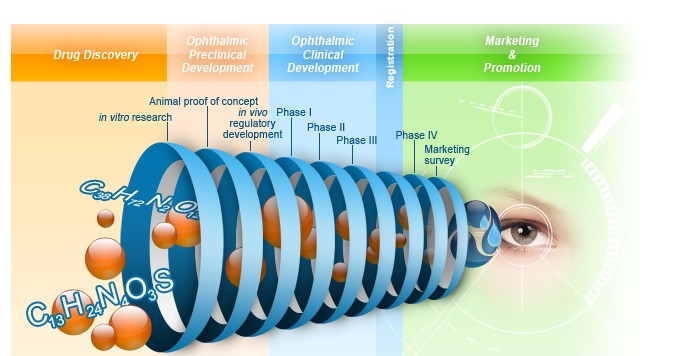
the long therapy "pipeline" starts with broad basic research

I want to get back to this question of curing diseases. In a way, Palin/Chavez/Begley are right: the academic community (like most sectors of our society) could do more relevant work. It's not that fruit flies and worms are useless - after all, breakthroughs like RNA interference, which cures cancer in animal models, emerged from such model systems. But research without grounding can turn into an intellectual "random walk," mental masturbation that rewards scientists for playing it safe. For biology to be relevant, we must avoid such distractions and focus on the big questions, using systems great and small.

Curing disease is a noble goal, but the fiscal and legal barriers are formidable. People are not lab rats, and thus experimental medicine requires an M.D. and carries serious legal/professional/ethical considerations. Remember Jesse Gelsinger's death, and the lawsuit that followed? That killed the field of gene therapy. And then there's the cost. Funding a biotech through a clinical trial costs ~500 million dollars - enough money to fund 1,000 academic research labs. (The FDA requires the doctors to take extremely detailed notes on each patient's progress, which takes up hundreds of billing-hours.) Most of these trials fail, and even successful drugs are often recalled when side effects are identified.

As a country, we are smart enough and rich enough to overcome these barriers if we want to. Health-related research funding is less than 5% of what we spend on the military, so each F-22 we cut is another clinical trial we can sponsor. But those trials shouldn't come at the cost of basic research that helps us understand how biology works. The problem is not the 1% of people doing basic research - it's the 99% of people that just don't care. As science journalist Henry Fountain recently put it, Our mass culture is just not that interested in hearing about it. But if we want better therapies, we need to encourage biologists to make those big discoveries, chase those big unknowns.

UPDATE 8/6: Jim Watson just weighed in on this issue from the perspective of the war on cancer. For once, he doesn't sound crazy.

Next: Cutting the cost of new cures.

Thursday, July 30, 2009

Did Michael Jackson's doctor KILL him?

What's clear is that Mikey's personal physician gave him a heavy anesthetic the night before he died. What isn't clear is whether he ever woke up in the morning. The drug in question (propofol) is quite dangerous and is usually only administered in hospitals, because it can cause breathing problems.

Granted, Mikey had issues. But he was not overweight or diabetic, and appeared in decent shape compared to other big stars. His sudden heart attack at 50 was unexpected, and now we know why. He might have lived another 20 years at least - had this douchebag with an MD not poisoned him!

(And don't even get me started on the cosmetic surgery that made him look like an alien. Some doctor did that to him, too.)

The physician's rule is "First, do no harm," and I wish every vocation had such noble priorities. But I find it strange to hear physician-scientists on the web constantly criticizing alternative medicine but never thinking to question the dangers of their own profession. Jackson's death is a reminder that medical technology is a double-edged sword. Physician, heal thyself!

Wednesday, March 25, 2009

Needles for needles? (Response to Orac comments)

I don't know when this Orac fellow sleeps, but he is not only a research scientist and surgeon but also writes a well-researched blog on medicine/biology. Recently he wrote a post criticizing a Baltimore prison program sponsoring acupuncture as a drug addiction therapy for inmates, saying it's a waste of $40,000 since acupuncture has been discredited as an addiction therapy in most studies.

Here is what I commented:
An interesting post. I agree in some ways, disagree in others. Have you ever tried acupuncture, Orac? Some people swear by it.

I doubt acupuncture will have much of an effect on drug addiction, we agree there. But then what does? There is no cure for addiction, just like there's no magic bullet for cancer. We spend plenty more than $40,000 treating addiction with all kinds of therapies that might also not work. We also spend trillions making wars that don't make any sense. Are you as critical of those programs as you are of this one?

As a research scientist, I think it's not a terrible idea to try some "high risk" therapies - ones that might not work, but if they do there's a big payoff.
I got a lot of responses. I will reply to a few of these here so my readers can benefit from the discussion.

@Techskeptic,
oh sigh... There is a reason that randomized double-blind studies are used to determine the efficacy of therapies – personal experience is unreliable.
Although double-blind studies are perhaps our most rigorous test of therapies, they are not infallible. They provide no mechanism and often use small sample sizes. Human society is very diverse and it's difficult to control for different variables.

Personal experience is subjective, certainly, but
it is still data. It's a valuable way of gaining insight into what is actually going on. I wouldn't be so quick to dismiss it. In fact, I'll bet most doctors use "personal experience" as their #1 diagnostic tool.
Please don’t tell us that your woo therapy worked because you felt better just after you were treated, unless you can explain why the improvement you experienced could not possibly be due to one of the following:

1. Placebo
2. Temporary mood improvements due to the personal nature of the treatment
3. Psychological investment of the patient in the success of the therapy...


I agree with your idea that we should try some high risk therapies. Its just that acupuncture is not one of them. Not only is it not an unknown, its been tested and tested for 30 years, and after initial confusion with placebo, its pretty damn clear that there is nothing else to support it.

First off, there was that Yale study that Orac mentioned in his post that suggested that acupuncture helps with cocaine addiction.

Second off, so what if it is placebo? We're talking about
inmate drug addiction here. Even if it works by providing the inmates a little personal contact and love - shouldn't we take advantage of that? Maybe placebos work.
As for being critical of other things, like wars...total non-sequitur. Superman could come here and wipe out everyone in the state of Virginia and if Orac didn't bother to comment on that, it still wouldn't make acupuncture any more effective or useful.
The question is about our priorities in spending public funds. How can you talk about the ants if you ignore the elephant in the room? (sigh)
@Becca,
It's funny, I think a lot of Orac's previous acupuncture posts start with the mention that once upon a time, he thought there might be something to the whole 'acupuncture thing'. Not the business with energy flow and meridians, but that there might be some science behind 'being poked with needles makes one's head hurt less'.

Then he did some reading on it, looked at studies that compared acupuncture with being poked with non-needles in the wrong places, and noticed that they show the exact same result. That's a very good sign that the needles aren't doing much, and it's mostly in the heads of the people being poked (maybe not consciously in there, but in there).

Hey, a few years ago I'd have been totally dismissive of acupuncture. But after 6 years in California, well... there's something in the water out here :) 

FYI, acupuncture and Chinese medical treatments are covered in your health insurance out here. They are practiced by licensed professionals. One of my housemates just passed her boards, she works side-by-side with a very successful MD.

As for the therapy being "mostly in the heads of the people being poked" -- see my reply to TechSkeptic above.
@Pareidolius,
I tried acupuncture when I was a believer in such things. I swore it up and down that it worked. It had to, it was expensive. Once I had awakened to what a gullible slave to woo I had become, I saw that acupuncture was really not any more effective than a good nap... The same was true for bodywork, reiki, and other assorted woo I used to swear by. Now I just go lie down or talk to someone I love or pet the dog or, well, you get the picture. Science works. Woo is wishful thinking.
I loved your story. This personal experience may be subjective, but it's still data.

I think some of these inmates might not have a dog to pet, or a loved one to talk to. Acupuncture may be beneficial for their health, possibly to help them relax, possibly as a placebo. I don't think it will cure their drug addiction. But who knows, maybe it couldn't hurt.

That's all the comments I feel like replying to right now. I got work to do. Science, y'know.